During college, I stumbled upon an interesting story of person named Daryl Davis, a Black American musician who has taken on racism in a very different way from what we are accustomed. Daryl Davis didn’t fight racism from afar; instead, he became involved with the Ku Klux Klan (KKK), a organization that believes only in the superiority of one race, to the exclusion of all others, and only allows for those of their race/beliefs to join.
At times, when my life was chaotic, Daryl Davis’ experiences opened my eyes and provided me with an entirely new perspective on how to deal with conflict while managing my emotions.
What was so unique about Daryl Davis’ activism was that he did not follow the typical activist playbook of having posters, marches, petitions or written manifestos. Rather, Daryl Davis was a listener who simply sat with members of the KKK and somehow transformed their hatred for people of color into empathy for them. An example is when he interviewed Roger Kelly, the national leader of the KKK. Many of Daryl’s friends stated he may be killed if he did so.
However, Daryl went on his own. Kelly and Daryl talked about a lot of things. They agreed about some, disagreed about many, but most importantly Kelly continued to tell Daryl how he was better than him because of his skin color and that Daryl would never be equal to him.
For most people, in such situations it would have been completely understandable to explode in anger and scream at Kelly for being wrong, to call him names for being a bad person and to possibly walk away from the conversation altogether. Daryl, however, was not trying to prove himself by winning a fight; he was attempting to derive an understanding of the place from which that poisonous attitude originated because he thought that if he could find the root of that attitude, then he could begin the process of removing it.
Daryl’s secret weapon for coping with this interaction with Kelly was respect. By showing Kelly the proper regard that was due him, Daryl was able to sit down with Kelly and allow him to voice his opinion; Daryl may not have agreed with all of Kelly’s ideas, but he allowed Kelly to express them while preserving his dignity, and he earned the opportunity to express his own opinion in return. Through this mutual respect, Daryl was able to crack open a door and allow some level of humanity to come in where hatred had previously ruled.
According to Daryl’s philosophy, we all have a cycle we fall into: we get fearful; we start accusing one another, which creates ignorance; ignorance creates fear because we fear what we don’t understand; if we allow this fear to continue to be present in the world without checking on it, that fear becomes the basis for hate, and through hate they will ultimately lead to destruction. The way for us to break that cycle as a people is through listening.
Patience as it pertains to listening is something that seems to be nearly lost in the world today. When you think of the world today, much of that activism has become shouts and insults, not only towards one another but labels like ‘racist’ and ‘fascist’ thrown around haphazardly. In the process it only fans the flame of hatred and there’s no path for understanding or real change to happen. We’re not immune to this at any level as we go through our daily lives, whether it be in protests, politics or everyday life. I know I wasn’t immune to it either.
I’m very much on the liberal side of the political spectrum, still I’m, but back in days I took great delight in mocking the right-wing Conservative political side without even taking the time to truly listen to any of their ideas or thoughts. All that created was division and increased the amount of hate, that is. If you truly want to be able to change the perspective of someone else, you’ve got to make them feel as if they’ve been heard. That requires dropping your guard and creating a space where both sides can share their stories with one another, instead of saying I’m right you are wrong.
You’ll learn from them, and they’ll learn from you, it’s a two-way street.
When I started thinking about how this lesson applies in my everyday life and relationships, I felt an incredible impact. I started to think about how often we label people rather than communicate with them or even give them a chance to show who they are. Daryl’s example continues to remind me to stop and deeply listen to people and to continue communicating with them even when pride gets in the way. People go through periods of difficulty and many times experience fear, hurt and other forms of stress during these phases, but this does not make them a bad person.
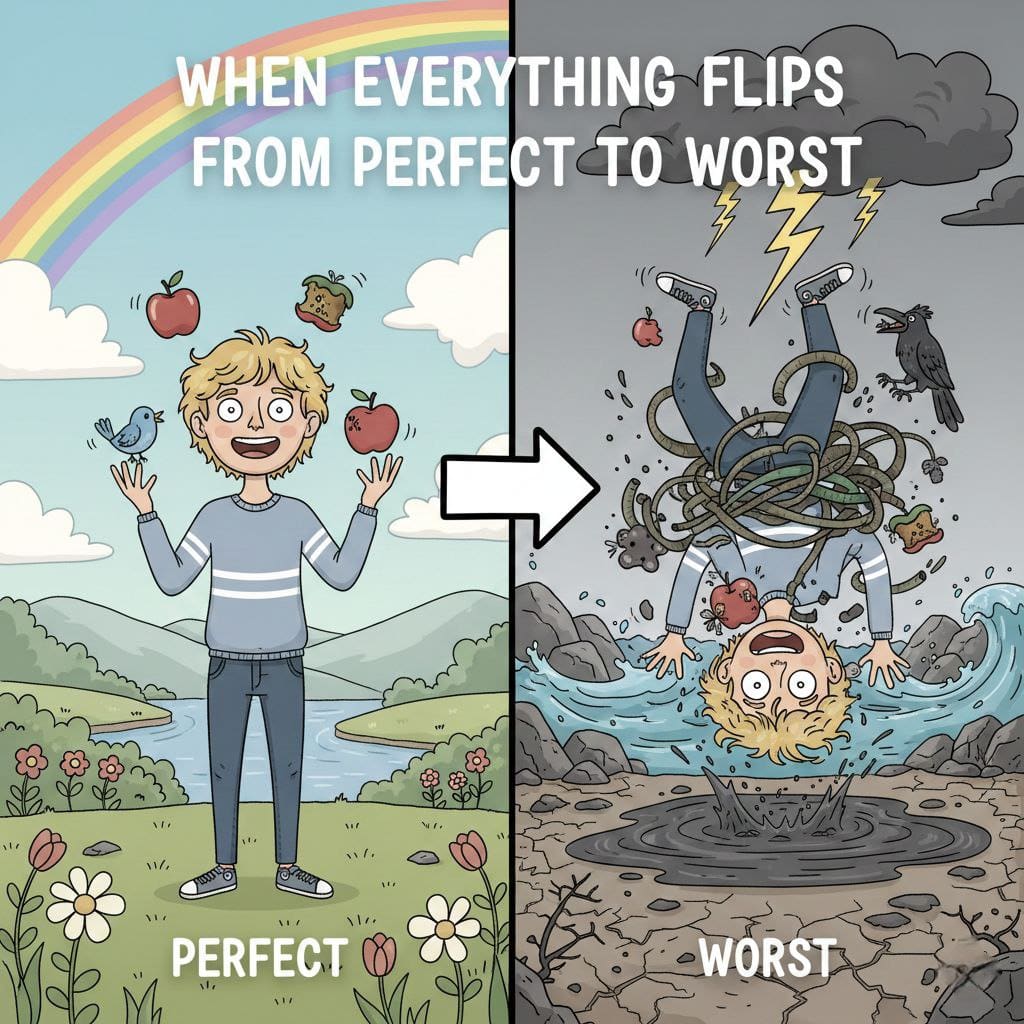
Realizing that during periods of extreme isolation or emotional overload, many of us has the tendency to view ourselves and those we love in terms of black and white, with no Grey area has been an eye-opener. During times of bliss and alignment, its common to view our partners as idealistic, special, even superhuman or the person who has finally recognized who we are. But as human beings, we are unable to continue this type of idealization because life presents us with disappointments, minor injuries, or miscommunications.
The changes felt when we experience those disappointments, injuries or miscommunications may seem sudden and startling. The person who was everything to us now seems to be the source of all pain; the partner who we thought so highly of now seems to be the worst person in the world. When that flip from all good to all bad occurs, we are frequently left feeling totally drained and bewildered and may therefore withdraw from the very connection that we want most, due to the fact that the fear and the hurt feel so intense at that time.
Whenever extreme views arise in the context of a relationship, we should remember that this is not necessarily the only thing true about themselves or their partner. The extreme view is likely a protective mechanism brought on by powerful emotional currents in a given person’s life, an expression of emotion, rather than evidence of the totality of the individual’s character. When we allow silence to take over and conversation stops happening, there is an opening for hate and/or resentment to grow. However, when we become proactive about supporting one another, that is the starting point for growing empathy and understanding, and potentially even healing.
Empathy is essential for humanity to progress both socially and in all aspects of existence. While the fear of approaching someone after they have been rejected during a period of silence may be overwhelming, the person should still know that they have the power to create changes through which they can connect, it’s never too late as long you aren’t in your death bed.
Next time you experience a disagreement (ideological or otherwise), consider supporting and listening to each other through the difficulty. Doing so may result in creating something beautiful out of the hate.